
High-performance Dioxazine Violet Pigment for inks, coatings, and industrial coloration
EC Number
213-879-2 / 228-767-9 / 201-344-6
Molecular Weight
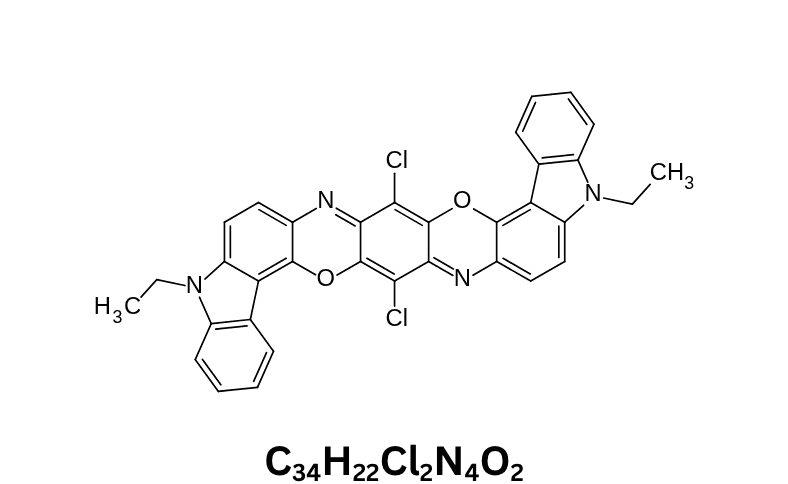
589.47 g/mol
Purity
95% – 99.99% (upto 5N)
Packaging
25 / 50 / 500 / 1000 kg bags
25 / 50 kg drums /
200 - 1000 ltr IBC
MOQ
1 T.E.U. (FCL)
Customization (incl. but not limited to)
for Grades / Forms / Specifications / Properties / Packaging available on request
Appearance ; Odor
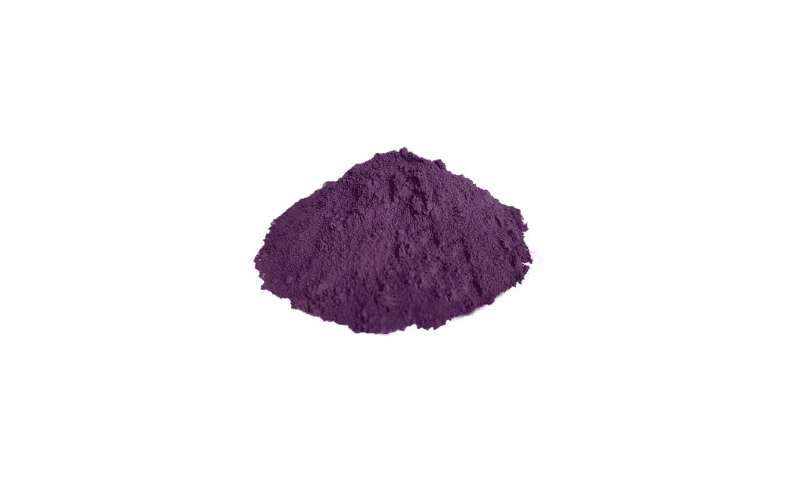
Violet Powder / Crystals ;
Odorless
Chemical Class
Dioxazine / Carbazole / Quinacridone / Manganese
Forms
Powder/Granular
IUPAC Name
2,20-dichloro-13,31-diethyl-4,22-dioxa-13,18,31,36-tetrazanonacyclo[19.15.0.3,19.05,17.06,14.07,12.023,35.024,32.025,30]hexatriaconta-1(36),2,5(17),6(14),7,9,11,15,18,20,23(35),24(32),25,27,29,33-hexadecaene
Pigment violet colorants comprise a versatile range of organic and inorganic chemistries engineered to deliver deep, high-chroma shades with excellent tinting strength, dispersion performance, and application flexibility. Organic variants based on dioxazine, quinacridone, carbazole, and perylene structures offer superior color purity, transparency, and high tint efficiency, making them highly suitable for inks, coatings, and plastics. These grades provide a broad performance spectrum — from cost-effective solutions for general-purpose applications to high-performance systems with outstanding lightfastness, chemical resistance, and long-term color stability. Their compatibility with various formulation systems ensures consistent processing behavior across solvent-based, water-based, and polymer-based applications.
Inorganic variants, including cobalt, manganese, and mixed metal oxide compositions, are designed for applications requiring exceptional durability, thermal stability, and resistance to harsh environmental conditions. These grades exhibit excellent opacity, UV stability, and resistance to chemicals, making them ideal for high-temperature processing, exterior coatings, and construction materials. Across the portfolio, optimized particle size distribution and surface treatment technologies enhance dispersibility, reduce processing time, and improve end-product performance. The availability of multiple physical forms — including powders, presscakes, dispersions, and masterbatches — supports efficient integration into diverse industrial systems while meeting global regulatory and sustainability requirements.
Our Pigment Violet grades are engineered for deep color strength, excellent dispersion, and superior resistance to heat, light, and chemicals, making them ideal for plastics, coatings, inks, and high-performance applications.
| Grade (C.I.) | Purity (%) | Key Properties | Form | Applications |
|---|---|---|---|---|
| Pigment Violet 23 | 98 – 99% | Very high tint strength, deep bluish shade, excellent dispersion | Powder / Flush / Solvent-based dispersion / Water-based dispersion / Masterbatch (PE, PP, PVC, ABS) / Ink concentrate | Offset, flexo & gravure printing inks, packaging inks (flexible & rigid), publication inks, UV & EB inks, digital & inkjet inks, plastics (injection molding, extrusion, films), decorative & industrial coatings, automotive refinish coatings, rubber goods, laminates, stationery inks |
| Pigment Violet 19 | 98 – 99% | Excellent lightfastness, weather resistance, high chroma | Powder / Surface-treated powder / Aqueous dispersion / Solvent dispersion / Masterbatch / Granules (dust-free) | Automotive OEM & refinish coatings, high-end industrial coatings, coil coatings, powder coatings, aerospace coatings, engineering plastics (ABS, PC, PET, nylon), fibers & textiles (solution dyeing), high-performance inks, architectural coatings, outdoor applications |
| Pigment Violet 29 | 98 – 99% | Exceptional heat stability, chemical resistance, high durability | Ultra-fine powder / Dispersion / High-temp masterbatch / Engineering polymer concentrates | Engineering plastics (PEEK, PPS, PET, polyamide), under-the-hood automotive parts, electrical & electronic housings, high-temperature coatings, powder coatings, industrial fibers, specialty coatings, aerospace components |
| Pigment Violet 3 | 96 – 98% | Bright shade, good color strength, cost-effective | Powder / Paste / Aqueous dispersion / Solvent dispersion | Decorative paints, general industrial coatings, economy printing inks, paper & board coloration, leather finishing, rubber products, textile printing, construction coatings, primers |
| Pigment Violet 37 | 97 – 99% | Improved dispersion, high strength, better process stability | Powder / Flush / Dispersion / Ink concentrates / Masterbatch | High-speed printing inks, packaging inks, UV inks, digital printing, plastics, industrial coatings, consumer goods, synthetic leather coatings |
| Pigment Violet 15 | 97 – 99% | Manganese-based, excellent heat stability, matte tone | Powder / Paste / Aqueous dispersion / Cosmetic-grade | Cosmetics (color cosmetics, eye shadows), ceramics, glass coloration, enamels, industrial coatings, plastics, artist colors, construction materials |
| Pigment Violet 14 | 98 – 99% | Cobalt-based, high durability, UV & heat resistant | Powder / Granules / Ceramic-grade / High-temp dispersion | Ceramics, glass, porcelain, enamel coatings, coil coatings, powder coatings, roofing materials, high-temperature plastics, architectural coatings, infrastructure applications |
| Pigment Violet 39 | 98 – 99% | Excellent outdoor durability, chemical resistance | Powder / Granules / Masterbatch / Ceramic dispersion | Exterior coatings, façade coatings, plastics for outdoor use, roofing sheets, infrastructure coatings, powder coatings, construction materials, industrial applications |
Our Pigment Violet grades are evaluated according to internationally recognized ISO, ASTM, and DIN standards to ensure consistent tinting strength, particle size distribution, dispersion efficiency, and excellent resistance to heat, light, chemicals, and weathering across coatings, plastics, inks, and high-performance applications.
| Parameter | Method | Specification |
|---|---|---|
| Appearance | ISO 787-1: General methods of test for pigments and extenders — Part 1: Comparison of colour of pigments | Violet powder (bluish to reddish shade depending on grade) |
| Color Shade | ISO 787-1: General methods of test for pigments and extenders — Visual comparison under standardized illumination (D65) | Bluish Violet to Reddish Violet (as per C.I. classification) |
| Tinting Strength | ISO 787-24: General methods of test for pigments and extenders — Part 24: Determination of relative tinting strength of coloured pigments | 100 – 150% (higher for Dioxazine & Quinacridone grades) |
| Oil Absorption | ISO 787-5: General methods of test for pigments and extenders — Part 5: Determination of oil absorption value | 30 – 80 g/100g |
| Moisture Content | ISO 787-2: General methods of test for pigments and extenders — Part 2: Determination of matter volatile at 105°C | ≤ 1.0 – 2.0% |
| pH Value | ISO 787-9: General methods of test for pigments and extenders — Part 9: Determination of pH value of an aqueous suspension | 6.0 – 8.0 |
| Particle Size (D50) | ISO 13320: Particle size analysis — Laser diffraction methods | 0.02 – 0.30 µm |
| Specific Surface Area | ISO 9277: Determination of the specific surface area of solids by gas adsorption — BET method | 20 – 100 m²/g |
| Bulk Density | ISO 787-11: General methods of test for pigments and extenders — Part 11: Determination of tamped volume and apparent density | 0.20 – 0.60 g/cm³ |
| Residue on Sieve (45 µm) | ISO 787-7: General methods of test for pigments and extenders — Part 7: Determination of residue on sieve | ≤ 0.05% |
| Lightfastness | ISO 105-B02: Textiles — Tests for colour fastness — Part B02: Colour fastness to artificial light: Xenon arc fading lamp test |
Dioxazine (PV23): 7 – 8 Quinacridone (PV19): 7 – 8 Perylene (PV29): 8 Inorganic (PV14, PV15): 8 |
| Heat Stability | DIN 53772: Testing of colouring materials — Determination of heat stability in plastics |
Dioxazine (PV23): 180 – 220°C Quinacridone (PV19): 250 – 300°C Perylene (PV29): up to 300°C+ Inorganic (PV14, PV15): up to 500°C+ |
| Weather Resistance | ISO 11341: Paints and varnishes — Artificial weathering and exposure to artificial radiation — Exposure to filtered xenon-arc radiation |
Good (Dioxazine) Excellent (Quinacridone / Perylene / Inorganic) |
| Solvent Resistance | ISO 787-15: General methods of test for pigments and extenders — Part 15: Determination of resistance to solvents | Good to Excellent |
| Acid Resistance | ISO 787-13: General methods of test for pigments and extenders — Part 13: Determination of resistance to acids | Good to Excellent |
| Alkali Resistance | ISO 787-14: General methods of test for pigments and extenders — Part 14: Determination of resistance to alkalis | Good to Excellent |
| Migration Resistance | DIN 53775: Testing of colouring materials — Determination of migration behaviour in plastics |
Moderate (Dioxazine) Very low (Quinacridone / Perylene / Inorganic) |
| Electrical Conductivity | ASTM D257: Standard Test Methods for DC Resistance or Conductance of Insulating Materials | Non-conductive |
| Heavy Metals (Pb, Cd, Hg) | ICP-OES Analysis / RoHS Directive (EU 2011/65/EU) Compliance Testing |
Heavy-metal-free grades available ≤ 10 – 50 ppm |
| VOC Content | ISO 11890-2: Paints and varnishes — Determination of volatile organic compound (VOC) content — Part 2: Gas chromatography method | ≤ 0.5 – 1.0% |
| Dispersibility | ISO 8780: Pigments and extenders — Methods of dispersion for assessment of dispersion characteristics |
Easy to High dispersion Surface-treated grades available |
| Property | PV3 | PV23 | PV19 | PV29 | PV37 | PV15 | PV14 |
|---|---|---|---|---|---|---|---|
| Appearance | Reddish violet powder | Bluish violet powder | Clean violet powder | Deep violet powder | Bluish violet powder | Dull violet powder | Bright violet powder |
| Moisture (%) | ≤ 2.0 | ≤ 1.5 | ≤ 1.0 | ≤ 1.0 | ≤ 1.0 | ≤ 1.0 | ≤ 1.0 |
| Sieve Residue (45 µm, %) | ≤ 0.10 | ≤ 0.05 | ≤ 0.05 | ≤ 0.05 | ≤ 0.05 | ≤ 0.05 | ≤ 0.05 |
| Bulk Density (g/cm³) | 0.30 – 0.55 | 0.25 – 0.55 | 0.30 – 0.60 | 0.35 – 0.65 | 0.30 – 0.60 | 0.50 – 0.80 | 0.60 – 0.90 |
| Particle Size (D50) | 0.10 – 0.40 µm | 0.05 – 0.25 µm | 0.05 – 0.20 µm | 0.03 – 0.15 µm | 0.05 – 0.20 µm | 0.20 – 0.60 µm | 0.30 – 0.80 µm |
| Oil Absorption (g/100g) | 35 – 60 | 40 – 70 | 30 – 50 | 25 – 40 | 35 – 60 | 20 – 35 | 15 – 30 |
| Lightfastness (Blue Wool) | 4 – 5 | 7 – 8 | 7 – 8 | 8 | 7 – 8 | 8 | 8 |
| Heat Stability (°C) | 160 – 200 | 180 – 220 | 250 – 300 | 300+ | 200 – 250 | 400+ | 500+ |
| Weather Fastness (Rating 1–5) | 2 – 3 | 3 – 4 | 4 – 5 | 5 | 4 | 5 | 5 |
| Heat Fastness (Rating 1–5) | 2 – 3 | 3 – 4 | 5 | 5 | 4 | 5 | 5 |
| Migration Resistance (Rating 1–5) | 2 | 3 | 4 – 5 | 5 | 4 | 5 | 5 |
| Acid Resistance (Rating 1–5) | 3 | 4 | 5 | 5 | 4 | 5 | 5 |
| Alkali Resistance (Rating 1–5) | 2 – 3 | 4 | 5 | 5 | 4 – 5 | 5 | 5 |
| Solvent Resistance (Rating 1–5) | 2 – 3 | 4 | 5 | 5 | 4 | 5 | 5 |
| Water Resistance (Rating 1–5) | 3 – 4 | 5 | 5 | 5 | 5 | 5 | 5 |
| Solubility | Insoluble | Insoluble | Insoluble | Insoluble | Insoluble | Insoluble | Insoluble |
| Tinting Strength (%) | 95 – 110 | 120 – 150 | 110 – 130 | 105 – 120 | 115 – 135 | 90 – 110 | 85 – 105 |
| Color Variation (ΔE) | ≤ 1.5 | ≤ 1.0 | ≤ 0.8 | ≤ 0.8 | ≤ 1.0 | ≤ 0.8 | ≤ 0.8 |
| Dispersion (Hegman Gauge) | 5 – 6 | 6 – 7 | 6 – 7 | 7 | 6 – 7 | 6 | 6 |
Carbazole violet pigment providing a reddish violet shade with good color strength and cost efficiency. Widely used in general-purpose coatings and inks where moderate fastness is acceptable.
Applications: Decorative paints, general industrial coatings, printing inks, paper coloration, rubber, textile printing.
Cobalt phosphate-based inorganic violet pigment offering excellent heat resistance, lightfastness, and chemical durability for demanding applications.
Applications: Ceramics, glass, enamels, coil coatings, powder coatings, architectural coatings, high-temperature plastics.
Manganese ammonium pyrophosphate pigment (Manganese Violet) known for its soft violet tone, excellent stability, and suitability for cosmetic and specialty applications.
Applications: Cosmetics (eye shadow, face products), coatings, plastics, ceramics, artist colors, specialty formulations.
Quinacridone-based high-performance pigment delivering outstanding lightfastness, weather resistance, and color purity across demanding applications.
Applications: Automotive OEM & refinish coatings, industrial coatings, plastics (engineering polymers), fibers, high-end inks.
Dioxazine violet pigment known for its extremely high tinting strength and deep bluish shade, making it one of the most widely used violet pigments globally.
Applications: Printing inks (offset, flexo, gravure), packaging inks, plastics, coatings, digital inks, laminates.
Perylene-based high-performance pigment offering exceptional durability, chemical resistance, and heat stability for engineering and specialty applications.
Applications: Engineering plastics (PEEK, PET, nylon), automotive components, high-temperature coatings, fibers, aerospace applications.
Modified dioxazine violet pigment offering improved dispersibility and processing stability compared to PV23, suitable for high-speed and advanced applications.
Applications: High-speed printing inks, UV inks, digital inks, plastics, industrial coatings, packaging inks.
Mixed metal oxide inorganic violet pigment engineered for extreme durability, weather resistance, and long-term outdoor stability.
Applications: Exterior coatings, façade coatings, roofing materials, plastics for outdoor use, infrastructure coatings, powder coatings.
Pigment Violet products, including carbazole and dioxazine pigments (PV3, PV23, PV37), high-performance quinacridone and perylene pigments (PV19, PV29), and inorganic pigments such as cobalt and manganese-based compounds and mixed metal oxides (PV14, PV15, PV39), are generally non-flammable, chemically stable, and insoluble materials. However, fine powders may generate airborne dust during handling, which can cause mechanical irritation to the eyes, skin, and respiratory tract. Certain inorganic and metal-containing pigments may include regulated elements (e.g., cobalt, manganese), requiring adherence to industrial hygiene practices and regulatory compliance.
Safety Data Sheets (SDS) are available upon request for detailed information on occupational exposure limits, regulatory compliance (REACH, RoHS), and safe handling practices.
Pigment Violet products are supplied in multiple packaging formats depending on physical form (powder, presscake, dispersion, granules, or masterbatch) and application requirements across coatings, plastics, inks, and specialty industries. Packaging systems are designed to ensure product integrity, moisture protection, and safe handling across domestic and international logistics networks.
Flexible packaging, labeling, and logistics solutions are available to meet specific industrial requirements and customer processing systems.
Our Pigment Violet portfolio supports sustainable manufacturing and long-term product performance through high durability, optimized pigment efficiency, and compliance with global environmental standards across coatings, plastics, inks, and specialty applications.

 Home
Home